Site clearance in Teesside
Site clearance on Teesside runs from around £300 for a heavily overgrown domestic garden to several thousand for development plots: scrub, bramble, self-seeded trees, saplings and stumps cleared, chipped and removed, leaving the ground ready for landscaping, building or sale.
From jungle garden to blank canvas
Teesside generates two kinds of clearance job. The first is the overgrown garden: a rental that sat empty, a probate property, or a new purchase on the estates of central Middlesbrough or Hartlepool where a decade of neglect means head-high bramble, self-seeded sycamore and buddleia out of the fence line. The second is pre-development clearance: stripping vegetation from plots ahead of extensions, new builds and commercial work, where everything woody has to come out and the stumps ground before the groundworkers start.
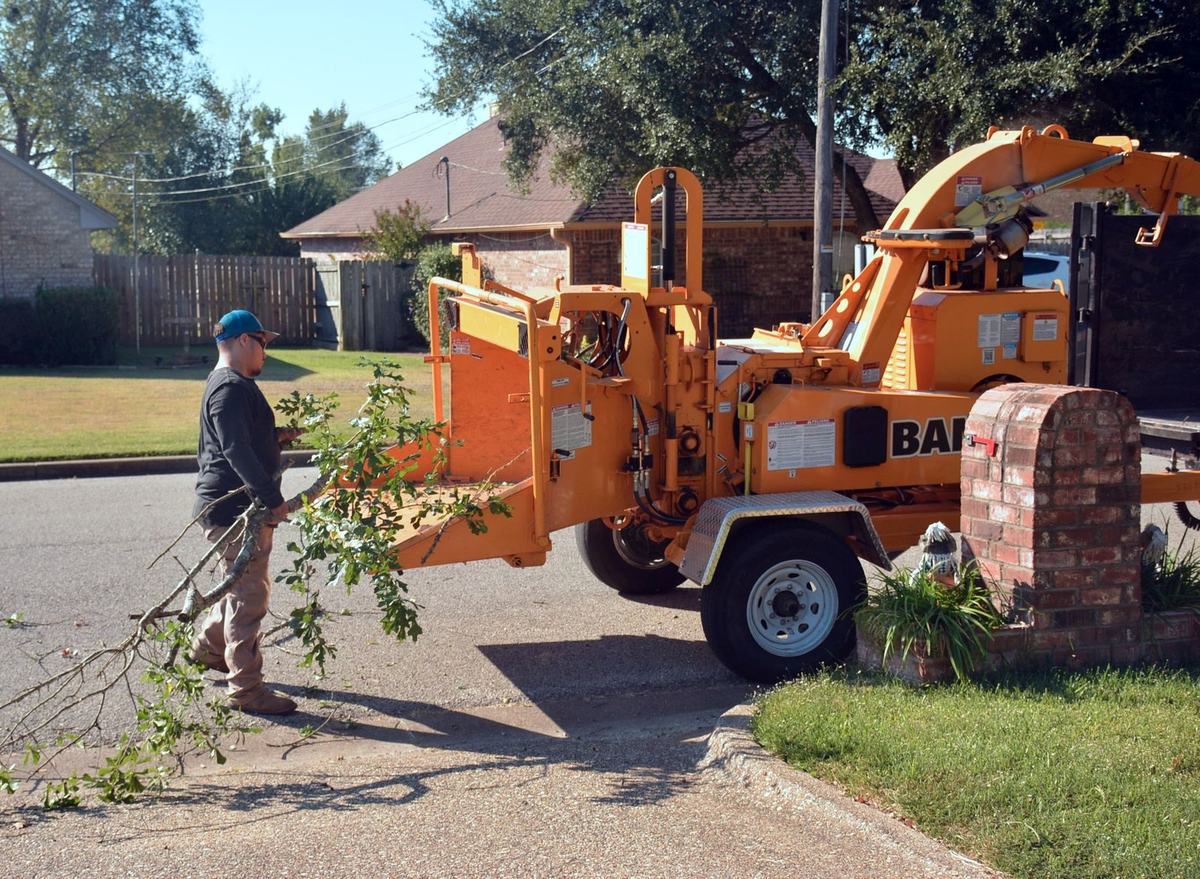
Both follow the same sequence: woody material cut and chipped on site, stumps ground where the ground is being built or paved on, waste loaded out, and a final rake-off. What changes is the kit, from brushcutters and a chipper on a garden job to a tracked flail or excavator-mounted mulcher on bigger plots.
What drives the price
- Volume and type of growth: light bramble is quick; mature self-seeded trees, old stumps and tangled hedge lines take cutting and grinding time.
- Access: a chipper at the kerb and a straight drag route is the cheap scenario. Terraced plots with no rear vehicle access add genuine labour.
- Waste: green waste goes to licensed facilities, and the tonnage is a real cost line. Any fly-tipped rubbish found in the undergrowth is priced separately, it is a different waste stream entirely.
- What stays: clearing around retained trees and hedges is slower than clearing everything to ground.
The legal checks before clearance
Nesting birds: clearance in the March to August season is legal only where no active nests are present, so in-season jobs start with an ecologist-style walk-through and work in checked sections. Protected trees: individual trees on the plot may carry TPOs even if the scrub does not, and conservation areas add notice requirements. Japanese knotweed: if it is present (it is established along parts of the Tees corridor), it needs a specialist treatment plan, not a flail, because fragmenting it spreads it. Waste carrier licence: whoever removes the arisings must hold one; ask for the number.
What you get left with
A cleared plot is left as rough ground, raked level, with mulch removed or spread as agreed. If the site is being landscaped, that is ready to work. If it is being built on, tell the clearance crew where the footprint and access run go: stumps in the footprint get ground deep, stumps outside it can be left shallow or left in, and that decision saves real money.